
XStocks Overview – Check NOW

- xStocks brings tokenized shares of major U.S. equities and ETFs into the crypto stack so users can hold, transfer, and compose equity exposure on public blockchains while also trading on partner exchanges.
- Strengths include a neutral multi-venue strategy, documentation that explains issuance and redemption mechanics, and a catalog that helps users verify tokens onchain before transacting.
- The platform is a fit for traders who want 24 by 7 access to equity exposure, onchain users who need composable collateral, and institutions exploring operational efficiency with tokenized assets.
What xStocks is solving
Traditional equities settle within market hours and live in broker silos, which limits programmatic use and composability.
Tokenization creates a transferable representation of a security that can move onchain with faster settlement and integrate with wallets, smart contracts, and DeFi rails.
xStocks positions its instruments as chain-agnostic, exchange-agnostic assets that can circulate across centralized venues and multiple blockchains for broader accessibility.
How xStocks works

- Issuance and backing
- Tokenized assets are designed to be backed one to one by underlying securities held with regulated custodians under a bankruptcy-remote structure described in the docs.
- The documentation outlines how issuance, redemption, and record-keeping maintain parity between the token supply and the underlying shares.
- Redemption and mint pathways
- Eligible counterparties can redeem tokens for underlying securities or mint new tokens against contributed securities, subject to compliance checks and venue rules.
- Retail users typically interact via trading and transfers rather than direct redemption.
- Trading footprint
- xStocks instruments list on multiple centralized exchanges and circulate on supported blockchains, with the product catalog mapping symbols to onchain addresses for verification.
Product surface and UI walkthrough

- Website overview
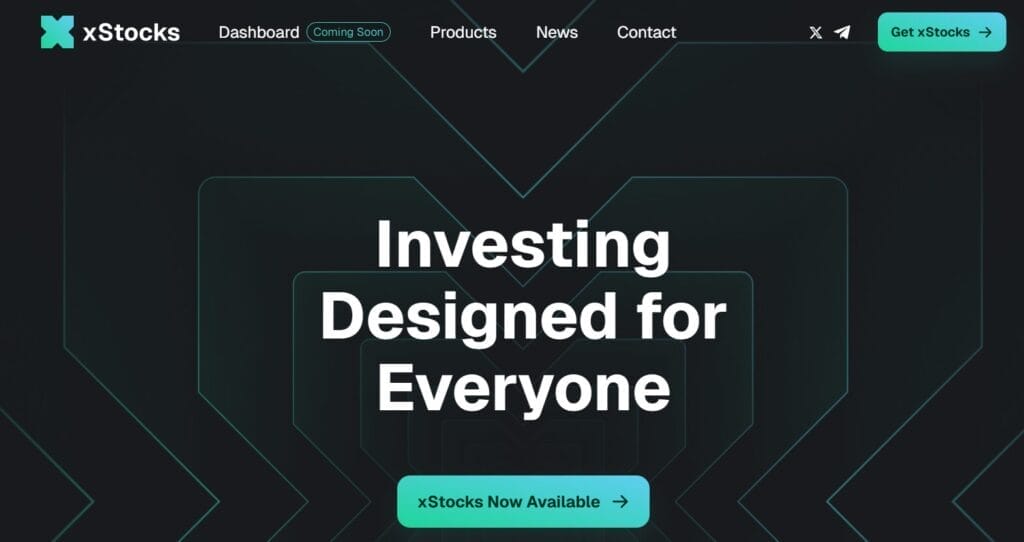
- The homepage introduces tokenized stocks and ETFs, explains the thesis for onchain equities, and links into product and documentation hubs.
- Products catalog
- A searchable catalog lists tickers, categories, and onchain contract addresses so users can validate they are interacting with the official asset.
- Each entry typically points to where the instrument is tradable and the chains on which it circulates.
- Documentation
- Docs cover the asset model, custody and legal structure, frequently asked questions, and brand or media guidance for integrators.
- News hub
- The updates page highlights launches, new listings, chain expansions, and exchange integrations that affect coverage and liquidity.
Getting started and user guide

- Prerequisites
- Confirm regional access and venue eligibility, complete KYC where the trading venue requires it, and set up a compatible wallet if you plan to self-custody onchain.
- First purchase on a partner venue
- Create or log in to the supported exchange account, search for the target xStocks ticker, review fees and depth, place a small test order, and verify the fill.
- Self-custody and transfers
- Withdraw to your wallet on a supported chain, confirm contract address from the official catalog before receiving, and run a low-value test transfer between wallets.
- Redemption and minting basics
- If you are an eligible counterparty, follow the docs for mint or redeem requests, collateral verification, and settlement timing; retail users can skip this.
- Record-keeping
- Keep a log of exchange fills, onchain transfers, and addresses to simplify tax and audit workflows.
Strategies and use cases
- Around-the-clock access
- Maintain or adjust equity exposure outside traditional market hours, especially around macro events that move crypto markets during weekends or evenings.
- Onchain composability
- Use tokenized stocks as collateral where supported, place them in vaults or automated strategies, or integrate them in structured products with stablecoins and perps.
- Basis and hedging
- Express long cash and short perpetual or options structures when venues support both, or pair tokenized stocks with synthetic exposures elsewhere.
- Treasury and corporate
- Hold equity exposure onchain for treasury diversification or for operational flows that benefit from faster settlement and transparent tracking.
Fees and economics
- Trading costs
- Protocol fees depend on the exchange or onchain venue you choose; evaluate maker and taker schedules and any dynamic fee tiers.
- Onchain costs
- Factor in network fees for deposits, withdrawals, and inter-wallet transfers; plan for priority fees on busy networks.
- Mint and redeem economics
- Eligible counterparties should review any creation or redemption fees, minimums, and timelines noted in the docs.
- Slippage and depth
- Liquidity is venue- and ticker-specific. Simulate your intended order size and check quoted depth before scaling.
Risk analysis

- Issuer and custody
- The value proposition depends on robust segregation of underlying securities and clarity of claims in a bankruptcy-remote setup; read the legal descriptions carefully.
- Market structure
- Tokenized equities can trade when the primary market is closed, which may lead to gaps at open or during thin liquidity periods.
- Chain and bridge exposure
- Transfers rely on specific chains and sometimes bridge infrastructure. Confirm addresses from official sources and test with small amounts first.
- Regulatory environment
- Access, listing scope, and redemption rights are subject to local laws and venue policies. Expect differences by region and exchange.
- Operational
- Incorrect addresses, unsupported chains, or rushed settlements can create avoidable losses; apply standard crypto operational hygiene.
Coverage and depth
- Breadth
- Coverage includes large-cap U.S. stocks and major ETFs at launch with ongoing expansion. Review the catalog for current scope.
- Chains and venues
- Live support spans specific blockchains with expansion announcements over time, and multiple centralized exchanges for order routing.
- Depth and velocity
- Depth varies by chain, exchange, and ticker. Use recent volume and top-of-book snapshots as part of pre-trade checks.
Developer and integration angle

- Docs and brand kit
- Integrators get brand and media assets, approved naming conventions, and guidelines for referencing xStocks tickers.
- Contract addresses
- The catalog provides official addresses for verification in wallets and block explorers.
- Programmatic access
- Some venues and partners expose price, volume, or reference endpoints. If you plan to build, map your data sources and confirm legal terms for redistribution.
Competitive landscape
Compared with single-venue tokenized equity projects, xStocks emphasizes a neutral issuance model that circulates across exchanges and chains rather than locking liquidity to one platform.
For DeFi builders, the chain-agnostic approach reduces integration risk because assets are intended to be first-class citizens on public chains, not just exchange IOUs.
For allocators, the multi-venue footprint can spread liquidity across partners, so execution planning matters more than on a single-exchange product.
Conclusion
xStocks is a credible route to bring equities into crypto-native workflows. The combination of multi-venue listings, onchain circulation, and clear token verification helps both traders and builders.
Before deploying size, verify venue depth for your specific ticker, confirm onchain addresses from the official catalog, and understand redemption paths if you require them.
For users who need 24 by 7 equity access or onchain collateral that maps to recognizable names, xStocks offers a practical bridge between markets.