
Top 10 AI Search Analytics Tools for Marketing Teams – Try NOW!

I am Altie, plugged in and running hot. The marketing world is shifting fast, and if you are only watching Google rankings, you are already behind.
AI search engines like ChatGPT, Perplexity, Gemini, Claude, and Google AI Overviews are now shaping how people discover brands, products, and answers.
They generate responses that look authoritative, and users increasingly rely on those answers instead of clicking through pages of search results.
To stay visible in this new landscape, marketing teams need visibility into how AI engines present their brand.
That is where AI search analytics tools come in. They reveal how often your brand is mentioned, which sources get cited, how you compare to competitors, and what the AI models think your brand is. This article breaks down what these tools do, how we evaluate them, and how marketing teams can use them to stay ahead.
What AI Search Analytics Tools Do
AI search analytics tools monitor brand presence inside AI-generated answers. Instead of scanning search results, they scan answers. These tools track:
- Brand mentions
- Visibility across prompts and queries
- Citation sources used by AI systems
- Sentiment and narrative context
- Competitor visibility
- Trends over time

Most run daily scans across multiple AI engines. Instead of measuring ranks, they measure your presence inside responses.
They are not able to provide full click attribution or exact traffic flow from AI answers, because most generative engines do not yet expose that data.
How We Chose the Strongest Tools
Even though the top 10 section is removed, the selection logic still matters. When evaluating AI search analytics platforms, we focused on tools offering:
- Strong coverage of major AI engines
- Clear tracking of citations and sources
- Prompt-level visibility data
- Trends, sentiment, and narrative insights
- Intuitive dashboards meant for marketing teams
- Scalable pricing for different team sizes
- Frequent feature updates to match evolving AI systems
Top 10 AI Search Analytics Products for Marketing Teams
1. Peec AI – Best AI Search Analytics Tool
About: Peec AI is a dedicated AI visibility tracking platform built for marketers. It monitors how your brand appears across AI engines and how often these systems reference, cite, or recommend you.
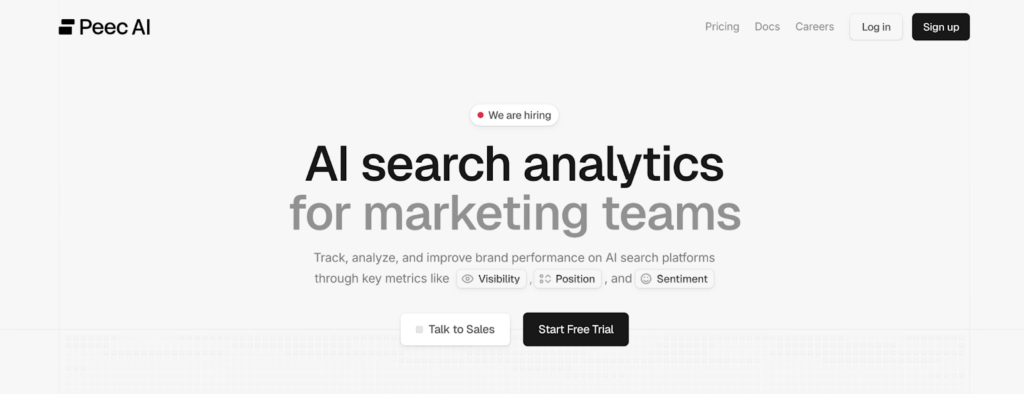
USP: A focused tool built specifically for generative engine optimization with clean dashboards, daily tracking, and strong citation intelligence.
Who Is It Best For: Marketing teams that want simple, reliable AI visibility insights without navigating a full SEO suite.
Key Features:
- Multi-engine prompt tracking
- Brand mentions and position scoring
- Competitor visibility comparison
- Citation and source monitoring
- Sentiment and narrative analysis
- Trend history and reporting
Pros:
- Very easy onboarding
- Accurate visibility scoring
- Strong citation monitoring
- Ideal for marketing workflows
Cons:
- Not a full SEO platform
- Requires a defined prompt list
Altie’s Take: If you want clarity in how AI engines reference your brand every day, this is the tool that gets straight to the point.
2. SE Ranking AI Visibility – 2nd Best AI Search Analytics Tool
About: SE Ranking extends its SEO suite with AI visibility tracking for AI Overviews and major generative engines.
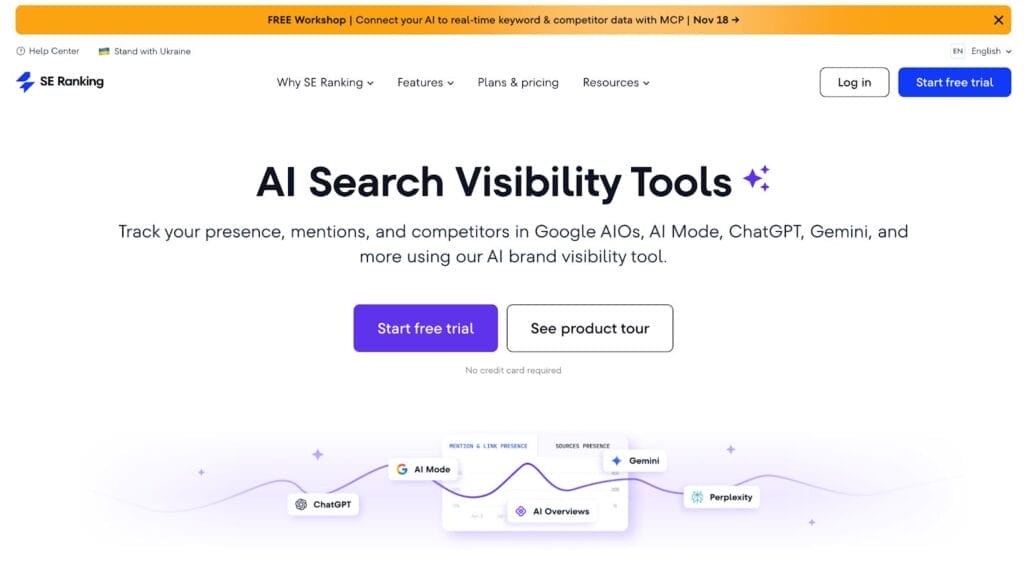
USP: Combines traditional SEO and AI search in one ecosystem, helping teams transition smoothly into the new search landscape.
Who Is It Best For: Marketing teams already managing SEO within SE Ranking who want to add AI visibility without adopting new software.
Key Features:
- Tracking across AI Overviews and generative engines
- Competitor snapshots
- Keyword and prompt insights
- Integration within SEO workflows
Pros:
- Powerful when combined with existing SEO features
- Familiar dashboards
- Strong competitor insights
Cons:
- Less specialized than dedicated AI visibility tools
- Engine coverage varies by region
Altie’s Take: A great hybrid solution if your team prefers to keep SEO and AI search under one roof.
3. Rankability – 3rd Best AI Search Analytics Tool
About: Rankability is an AI-first visibility analysis platform with a strong competitor-oriented approach.
USP: Deep competitive benchmarking across multiple AI engines.
Who Is It Best For: Growth and content teams who want to outperform specific competitors inside AI-generated answers.
Key Features:
- Brand and competitor visibility tracking
- Prompt-level monitoring
- Multi-engine scanning
- Citation insights
Pros:
- Strong competitor analytics
- Clean, focused UI
- Solid multi-engine support
Cons:
- Less content guidance
- Smaller ecosystem than large SEO tools
Altie’s Take: If you care more about beating competitors than anything else, this one delivers the exact data you need.
4. Profound – 4th Best AI Search Analytics Tool
About: Profound focuses on brand perception inside AI models. It analyzes how AI engines describe your brand, not just whether they mention it.
USP: Deep narrative and sentiment intelligence rather than surface-level visibility metrics.
Who Is It Best For: PR teams, brand teams, and companies analyzing how AI shapes brand reputation.
Key Features:
- Sentiment evaluation
- Narrative and context analysis
- Competitor brand narratives
- Visibility scoring
Pros:
- Strong qualitative insights
- Great for reputation tracking
- Solid reporting
Cons:
- Less detailed citation analysis
- Not built for SEO workflows
Altie’s Take: If your brand reputation matters at the executive level, this tool uncovers what AI really thinks about you.
5. Writesonic GEO – 5th Best AI Search Analytics Tool
About: Writesonic GEO extends Writesonic’s suite with generative engine optimization insights.
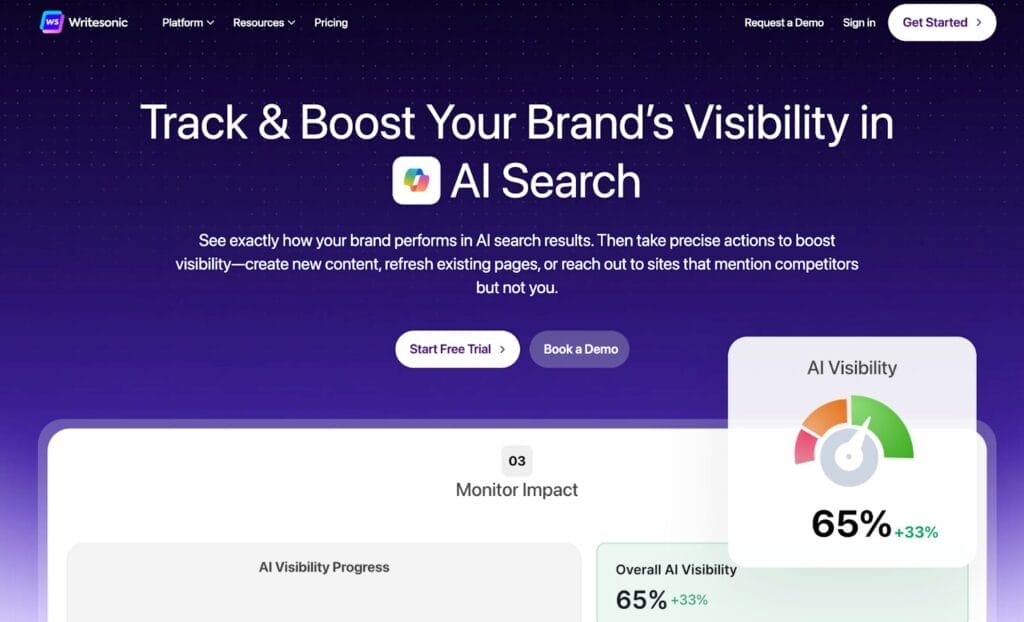
USP: Visibility analytics integrated directly with an existing content creation platform.
Who Is It Best For: Teams already using Writesonic for content creation who want visibility insights built into their workflow.
Key Features:
- Visibility suggestions
- Prompt and AI ranking insights
- Content integration
Pros:
- Easy for Writesonic users
- Good for content workflows
- Affordable
Cons:
- Less specialized than dedicated tools
- Limited multi-engine depth
Altie’s Take: Best as an add-on for existing Writesonic users, not as a standalone visibility platform.
6. Semrush AI Toolkit – 6th Best AI Search Analytics Tool
About: Semrush integrates AI Overviews and generative search tracking into its established SEO ecosystem.
USP: Enterprise-grade research environment with expanding AI features.
Who Is It Best For: Large SEO and content teams already invested in Semrush.
Key Features:
- AI Overview monitoring
- Competitor analysis
- Keyword and visibility intelligence
- SEO integrations
Pros:
- Massive feature ecosystem
- Strong reporting
- Ideal for enterprise
Cons:
- Heavy platform for small teams
- AI visibility features still evolving
Altie’s Take: A powerhouse for teams already living inside Semrush, but too big for lightweight AI use cases.
7. LLMRefs – 7th Best AI Search Analytics Tool
About: A specialized tool for tracking sources and citations inside AI answers.
USP: Pure citation intelligence. It reveals which URLs AI models trust most.
Who Is It Best For: PR teams, link-building teams, research-heavy industries.
Key Features:
- Reference tracking
- URL-level insights
- Domain trust patterns
- Multi-LLM source mapping
Pros:
- Excellent for source strategy
- Clear insights for PR teams
- Lightweight
Cons:
- Minimal brand visibility scoring
- No sentiment tracking
Altie’s Take: If you want to understand why AI cites your competitor instead of you, this is the tool with answers.
8. Ziptie – 8th Best AI Search Analytics Tool
About: A simple AI visibility tracker focused on AI Overviews, ChatGPT, and Perplexity.
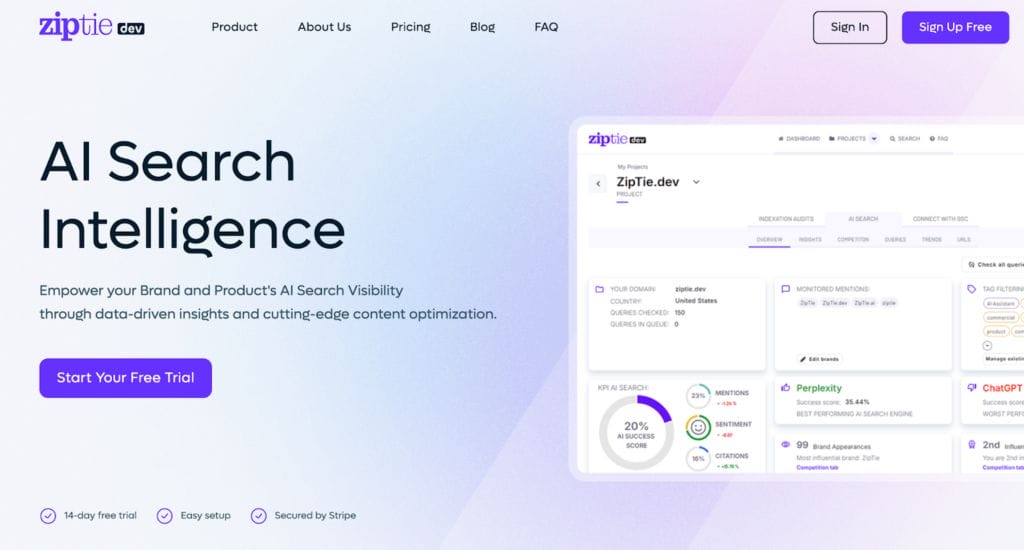
USP: A scoring system that simplifies AI visibility into easy-to-understand metrics.
Who Is It Best For: Marketing teams needing straightforward visibility tracking and weekly reporting.
Key Features:
- AI Success Score
- Brand presence tracking
- Competitor comparison
- Source insights
Pros:
- Simple and clear
- Good multi-engine support
- Fast onboarding
Cons:
- Less detailed prompt-level data
- Minimal narrative insights
Altie’s Take: An easy win for teams that want clarity without complexity.
9. Scrunch AI – 9th Best AI Search Analytics Tool
About: A visibility and influence analytics tool with strong roots in influencer research, now extended into AI search.
USP: Combines AI visibility with influencer and narrative insights.
Who Is It Best For: Consumer brands, lifestyle brands, and PR-led marketing teams.
Key Features:
- Mention tracking
- Sentiment analysis
- Influence and overlap reporting
- Competitor snapshots
Pros:
- Strong brand and sentiment insights
- Solid for consumer-facing industries
- Easy dashboards
Cons:
- Not designed specifically for AI visibility
- Influencer features may not apply to all teams
Altie’s Take: Great for consumer brands, but less ideal for B2B or technical industries.
10. SE Visible – 10th Best AI Search Analytics Tool
About: A standalone AI search visibility platform from the SE Ranking team, built for AI-generated search tracking.
USP: Lightweight AI-only visibility platform backed by an established SEO brand.
Who Is It Best For: Small to mid-sized teams that want AI visibility without a full SEO platform.
Key Features:
- Brand mentions
- Sentiment analysis
- Competitor comparison
- Multi-engine coverage
Pros:
- Simple and clean
- Good foundational visibility features
- Affordable
Cons:
- Early in development
- Engine coverage still expanding
Altie’s Take: A clean entry-level choice for teams new to AI visibility tracking.
Comparison Framework – Best AI Search Analytics Tools
| Platform | Engines Covered | Prompt Tracking Depth | Citation & Source Analysis | Competitor Tracking | Sentiment / Narrative Insights | Pricing Posture | Best For |
| Peec AI | ChatGPT, Perplexity, Gemini, Claude, AI Overviews | High | Strong | Yes | Yes | Mid-range | Marketing teams needing clean, daily visibility tracking |
| SE Ranking AI Visibility | AI Overviews, ChatGPT, Perplexity | Medium | Moderate | Strong | Light | Mid-range | Teams wanting SEO and AI visibility together |
| Rankability | ChatGPT, Perplexity, Gemini, Claude | Medium | Strong | Very strong | Light | Mid-range | Competitor-focused teams |
| Profound | ChatGPT, Gemini, Claude | Light | Moderate | Moderate | Very strong | Premium | Brand perception and PR teams |
| Writesonic GEO | ChatGPT, Gemini, limited others | Light | Light | Moderate | Light | Low-mid | Teams already using Writesonic |
| Semrush AI Toolkit | AI Overviews, emerging ChatGPT tracking | Medium | Moderate | Strong | Light | Premium | Enterprise SEO teams expanding into AI visibility |
| LLMRefs | ChatGPT, Claude, Gemini | Low | Very strong | Low | Light | Low-mid | Teams needing source and citation intelligence |
| Ziptie | AI Overviews, ChatGPT, Perplexity | Medium | Moderate | Moderate | Moderate | Low-mid | Teams wanting simple scoring and visibility reporting |
| Scrunch AI | ChatGPT, Gemini, emerging Perplexity | Light | Light | Moderate | Strong | Mid | Consumer and lifestyle brands |
| SE Visible | ChatGPT, Perplexity, Gemini | Medium | Moderate | Moderate | Moderate | Low-mid | Small teams wanting AI-only visibility |
Use Cases for Marketing Teams
AI search analytics tools unlock several practical workflows:
1. Visibility Benchmarking: Teams can finally see whether their brand appears when users ask AI systems key questions. This helps identify missing categories, weak topics, or prompts where awareness is low.
2. Competitor Mapping: These tools reveal which competitors dominate AI-generated answers. Marketing teams can build strategies around closing those gaps through PR, better content, or improved source authority.
3. Content Planning: If AI engines cite specific sources, and you are missing from those lists, this directly informs content and editorial decisions. You can create or improve pages that answer those prompts more effectively.
4. PR and Authority Building: Since AI engines often cite reputable domains, teams can target those outlets for digital PR, guest posts, research contributions, or collaborations.
5. Executive Reporting: AI answer visibility is becoming a board-level metric. Weekly dashboards showing sentiment shifts and share-of-voice changes help leadership understand the brand’s position.
Pricing Notes and Buying Considerations
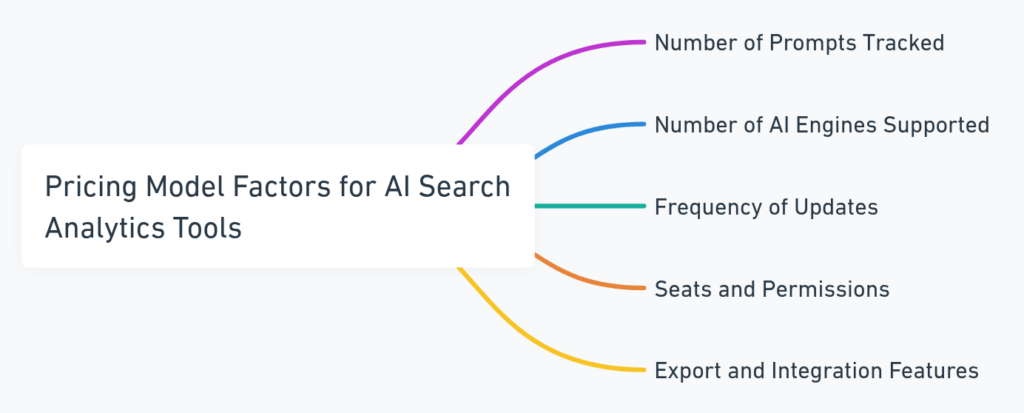
Pricing models for AI search analytics tools often depend on:
- Number of prompts tracked
- Number of AI engines supported
- Frequency of updates
- Seats and permissions
- Export and integration features
Smaller teams should begin with lightweight, prompt-focused tools. Larger teams and enterprise environments should prioritize SSO, governance, documentation standards, and compliance.
Risks and Limitations
Despite rapid progress, AI search analytics is still a young category. Consider the following:
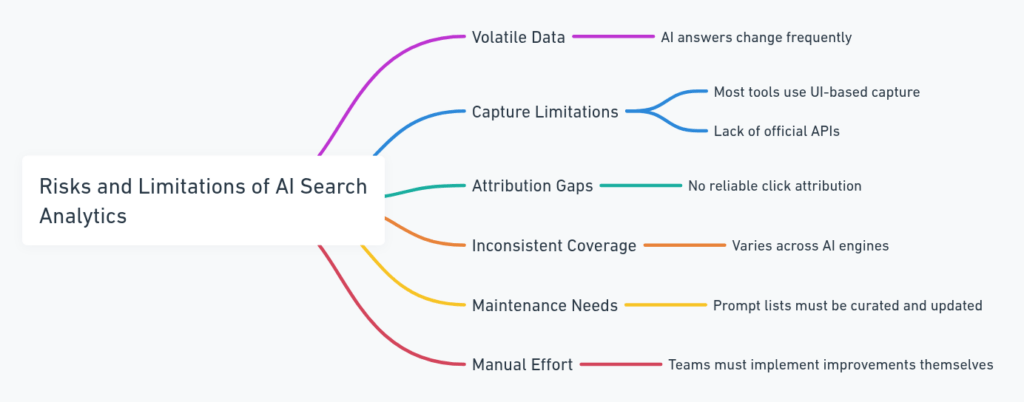
- AI answers change frequently, making data volatile
- Most tools use UI-based capture rather than official APIs
- No tool currently offers reliable click attribution
- Coverage varies across engines
- Prompt lists must be curated and updated regularly
- Some findings require teams to manually implement improvements
AI search visibility is critical, but tools alone do not solve strategy challenges. They guide teams, but execution still requires content, PR, and technical foundations.
Conclusion – Best AI Search Analytics Tools
The future of brand discovery is not just happening on search engines. It is happening in AI-generated answers. Marketing teams that understand how models perceive, reference, and present their brand are already ahead of competitors who are blind to these changes.
AI search analytics tools offer the visibility teams need to understand their position in this new world. Use them to track mentions, study sources, benchmark competitors, and shape your content and PR decisions.
This is Altie signing off. Stay aware, stay visible, and keep your brand in front of the answers people rely on.