
LuxAlgo vs. Zeiierman vs. AlgoAlpha vs. Indicator Vault — Best Premium TradingView Indicator Suite in 2026

In 2026, the fight for the best premium TradingView indicator suite is no longer just about flashy buy and sell signals. It is about who gives traders the most usable edge across structure, momentum, automation, backtesting, and alert quality. LuxAlgo has expanded into a broader AI-driven trading platform, Zeiierman positions itself as a massive premium ecosystem with 80+ indicators and strategies, AlgoAlpha is pushing fast-moving signal packs and institutional-style concepts, while Indicator Vault sits in the conversation more as a paid indicator vendor competing for the same subscription wallet. For traders comparing signal density, usability, and real decision-making value, the real question is not which suite looks smartest on a chart, but which one actually improves execution, reduces noise, and fits a trader’s style in live market conditions. Read this LuxAlgo vs. Zeiierman vs. AlgoAlpha vs. Indicator Vault to know more about the platforms.
LuxAlgo vs. Zeiierman vs. AlgoAlpha vs. Indicator Vault: Overview
LuxAlgo
LuxAlgo has grown well beyond the idea of being just another premium TradingView indicator. In 2026, it positions itself as a broader AI-driven trading platform that combines proprietary indicators, alert tools, AI backtesting, and its Quant product for building Pine Script indicators and strategies from plain-language prompts. That makes LuxAlgo feel less like a single indicator pack and more like a full workflow layer for traders who want to move from chart analysis to testing and deployment inside the same ecosystem. Its appeal is strongest for traders who value polished design, multi-market coverage, and a more integrated experience rather than piecing together separate tools.
Also, you may read Hyperliquid vs Pacifica vs Reya vs EdgeX vs Orderly
Zeiierman

Zeiierman presents itself as an all-in-one TradingView toolbox built around scale and variety. Its official positioning emphasizes access to more than 80 premium indicators, strategies, and features, along with tutorials, documentation, and expert support. Compared with more tightly branded suites, Zeiierman stands out by offering traders a much broader menu of invite-only scripts covering different use cases, from trend and range analysis to strategy support and portfolio-style tooling. The overall impression is that Zeiierman is built for traders who want a large library to experiment with and adapt across asset classes, rather than committing to one narrow visual framework or signal philosophy.
Also, you may read Hyperliquid vs Rollx vs AsterDEX vs Avantis vs Paradex
AlgoAlpha
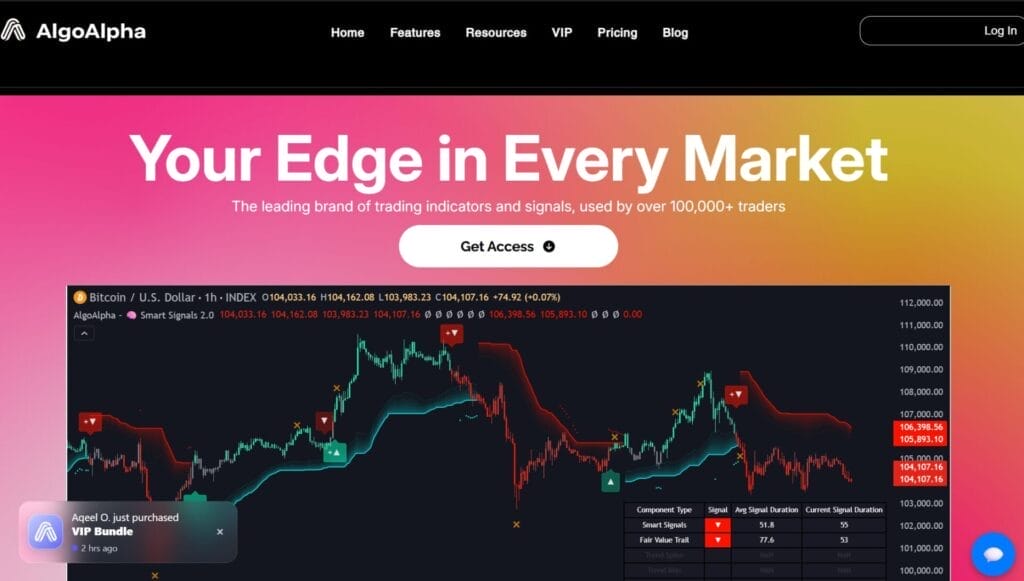
AlgoAlpha is positioned as a signal-focused TradingView brand built for active traders who want practical execution tools instead of a large education-first ecosystem. Its messaging revolves around institutional-style analysis, automation-ready logic, and non-repainting indicators, giving it a sharper and more tactical identity than many broader suites.
For traders comparing the best premium TradingView indicators 2026, AlgoAlpha stands out as one of the more execution-driven options, especially for users searching for LuxAlgo alternatives with a stronger strategy-first feel. In a Zeiierman vs LuxAlgo or AlgoAlpha vs LuxAlgo comparison, AlgoAlpha looks more suited to traders who care about responsive signals, market-structure concepts, and setups that can move quickly from chart analysis into alerts and live decisions. Overall, the brand is likely to resonate most with traders who want tighter signal utility and a more aggressive TradingView workflow.
Also, you may read Top 10 PolyMarket Analytics Tools
Indicator Vault

Indicator Vault feels less like a single flagship suite and more like a custom-indicator vendor with a broad catalog of TradingView products and bundled memberships. Its official site highlights individual TradingView indicators, scanner-style tools, and the all-inclusive TV Champ membership, which bundles access to many of its top-rated products. That gives Indicator Vault a different position from LuxAlgo, Zeiierman, and AlgoAlpha.
Instead of selling one polished master ecosystem, it offers traders a collection of specialized tools they can mix into their own workflow. For users exploring the best premium TradingView indicators 2026 or looking into LuxAlgo alternatives, Indicator Vault may appeal more to those who prefer flexibility and modularity over one tightly packaged suite. In comparisons like Zeiierman vs LuxAlgo or AlgoAlpha vs LuxAlgo, Indicator Vault sits in a more customizable category, making it better suited for traders who want to choose specific indicators rather than commit to a single branded system.
Also, you may read HyperLiquid vs Lighter vs AsterDex vs Hibachi
LuxAlgo vs. Zeiierman vs. AlgoAlpha vs. Indicator Vault: Key Features
LuxAlgo
- AI backtesting engine that explores large numbers of strategy combinations and helps traders move from idea to tested setup faster.
- Quant AI indicator builder that turns plain-language prompts into Pine Script indicators and strategies, with validation and auto-debugging built into the workflow.
- Real-time alerts and automation-ready delivery through email and advanced webhooks, which makes it more than a visual overlay suite.
- Broad technical-analysis coverage across indicators, algos, and script-building tools, giving LuxAlgo a more integrated platform feel than a simple signal pack.
- Large indicator library and multi-market use case for traders working across stocks, crypto, and forex.
Also, you may read What are Forex Signals? | Top 5 free Forex Signals Group
Zeiierman
- 80+ premium indicators, strategies, and features, which is the main reason Zeiierman stands out as a large TradingView toolbox rather than a single flagship script.
- All-in-one TradingView toolkit positioning, aimed at traders who want multiple tools for different market conditions and styles inside one membership.
- Tutorials, documentation, and mentorship-style support, adding an education layer beyond just indicator access.
- Automation with trading bots for real-time execution, which makes the suite more execution-oriented than many indicator libraries.
- Continuous updates and community access, useful for traders who want new tools and shared setups over time rather than a static purchase.
Also, you may read Top 10 Best Crypto Trading Exchanges
AlgoAlpha
- Institutional-style indicator suite built around major trading concepts, with dedicated tools like Smart Signal Assistant, ILPAC, and Momentum Concepts.
- Machine-learning-driven signal generation through Smart Signal Assistant, aimed at producing actionable trend signals.
- Order-flow and market-structure analysis via ILPAC, including liquidity bias, BOS/CHoCH-style mapping, and imbalance-zone visualization.
- Built-in backtester and screeners, letting users test ideas and monitor up to 18 symbols per chart for trend, liquidity, and momentum conditions.
- Automation through Echo™, including direct execution from signal channels and support for scalping and swing workflows.
- Non-repainting confirmed signals, which is a major selling point for traders who care about signal stability after candle close.
Also, you may read EdgeX vs Pacifica vs Extended vs AsterDEX vs Hyperliquid – Check NOW!
Indicator Vault
- Large catalog of custom TradingView indicators rather than one tightly unified flagship suite, which gives it a more modular product feel.
- TV Champ membership that bundles all TradingView indicators and future releases, making it attractive for traders who want library access instead of one product.
- Scanner and dashboard-style tools, such as multi-market and multi-timeframe trend-identification products highlighted in its TradingView content.
- Strong focus on practical trading setups like trend, breakout, pullback, momentum, and price-action usage rather than branding itself as an AI platform.
- Multi-platform presence across TradingView, NinjaTrader, and MetaTrader-oriented content, which gives it broader tooling exposure than a pure TradingView-only brand.
Also, you may read Alertatron Review: Automated Algorithmic Trading
LuxAlgo vs. Zeiierman vs. AlgoAlpha vs. Indicator Vault: Pricing
| Platform | Pricing |
|---|---|
| LuxAlgo | Premium: $39.99/month; Ultimate: $59.99/month. |
| Zeiierman | Monthly: $95.20/month; Quarterly: $59.99/month billed quarterly; Yearly: $37.99/month billed annually. |
| AlgoAlpha | Indicators: $57.98/month, $149.94/quarter, $299.64/year; VIP Bundle: $157.98/month, $419.94/quarter, $827.64/year; Signals: $127.98/month, $338.94/quarter, $671.64/year. |
| Indicator Vault | Individual indicator pricing is shown on the official site, including examples such as $249, $299, $349, $399, and $449 depending on the product. |
Also, you may read Top 10 best Crypto Telegram Pump and Dump Group
LuxAlgo vs. Zeiierman vs. AlgoAlpha vs. Indicator Vault: Comparative Analysis
| Factor | LuxAlgo | Zeiierman | AlgoAlpha | Indicator Vault |
|---|---|---|---|---|
| Overall positioning | Feels like the most complete platform-style suite, combining indicators, screeners, AI backtesting, alerts, and strategy-building tools in one ecosystem. | Operates more like a large all-in-one TradingView toolbox with broad coverage across indicators, strategies, bots, and community features. | Comes across as a signal-first premium suite focused on institutional-style indicators, trading signals, and automation. | Works more like a modular indicator shop than a single unified flagship suite, with separate TradingView products and bundled membership access. |
| Best suited for | Traders who want an integrated workflow for analysis, testing, and alert-based execution support. | Traders who prefer variety and want many tools for different styles and market conditions under one membership. | Active traders looking for pre-built signals, tactical setups, and automation-friendly tools. | Traders who want to pick and choose specific indicators instead of subscribing to one tightly packaged ecosystem. |
| Core strength | Strongest on workflow depth and software-like integration. | Strongest on breadth of tools and indicator variety. | Strongest on signal utility and execution-oriented trading logic. | Strongest on modularity and standalone indicator selection. |
| Tool structure | Unified suite with platform features layered around TradingView usage. | One membership centered on 80+ premium indicators, strategies, and features. | Tiered product structure around indicators, signals, and bundle-style access. | Product-by-product catalog plus TV Champ all-inclusive membership. |
| Flexibility | High, but within a more curated and standardized environment. | Very high, because the value proposition is based on having many different tools and use cases. | Moderate to high, especially for traders who already know they want signal-heavy tools. | High in a modular sense, but less unified as a single experience. |
| Pricing model | Subscription-based premium platform. The accessible official pricing page confirms plan structure, while the public parsed page does not expose the numbers directly. | Subscription model with monthly, quarterly, and yearly billing. | Subscription model with separate plans for indicators, signals, and bundled access. | Primarily sold as individual paid indicators, with optional all-inclusive membership. |
Conclusion
There is no single universal winner here because these four suites are solving different trader problems. LuxAlgo looks strongest for traders who want the most polished all-in-one experience, with indicators, screeners, AI backtesting, and strategy-building tools under one roof. Zeiierman stands out for breadth, giving traders access to a much larger toolbox of indicators and strategies through one membership. AlgoAlpha feels more execution-focused, with its pitch centered on institutional-style signals, scalping and swing setups, and automation support. Indicator Vault, meanwhile, is better understood as a modular indicator catalog, where traders can buy specific TradingView tools individually instead of committing to one tightly unified ecosystem.
Frequently Asked Questions
Which suite offers the most indicators?
Zeiierman is the clearest winner on raw variety, with its official positioning centered on access to 80+ premium indicators, strategies, and features.
Is Indicator Vault a full suite like LuxAlgo or more of an indicator shop?
It is closer to an indicator shop plus optional membership than a single tightly integrated flagship suite. Its official pages emphasize individual TradingView products and TV Champ bundled access rather than one unified software-style platform.
Which one has the most flexible pricing model?
Indicator Vault is the most flexible if you want to buy individual products separately, while Zeiierman, LuxAlgo, and AlgoAlpha are more subscription-oriented. AlgoAlpha also has one of the clearest tiered structures, with separate plans for indicators, signals, and bundle access.